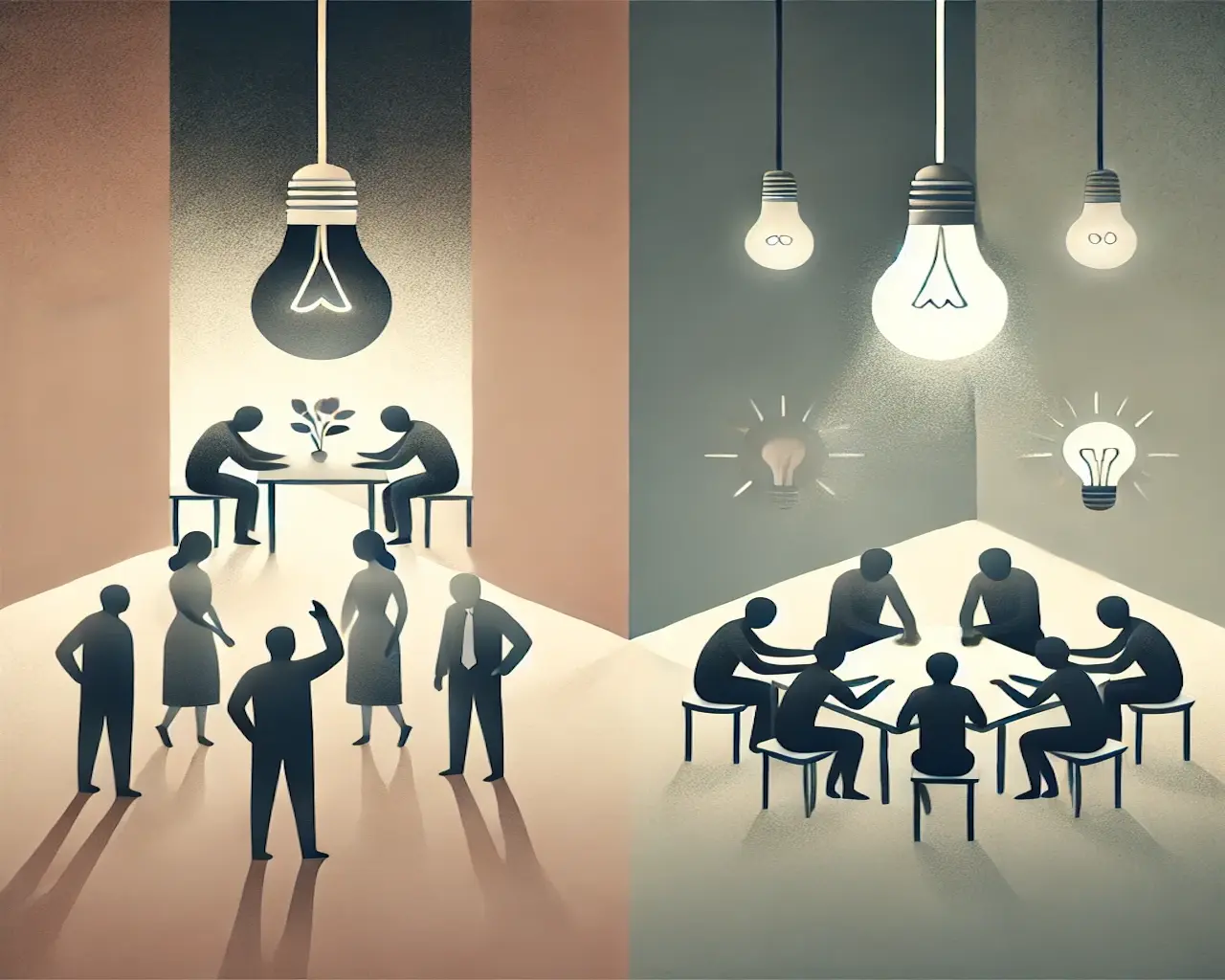
If your team isn't speaking up, thinking creatively, or solving problems on their own — it's probably not a talent problem. Nine times out of ten, it's fear. And the source of that fear is usually sitting at the top of the org chart.
Are You Leading with Fear or Fostering Growth?
I've seen it time and time again. A business owner comes to me frustrated, wondering why their team isn't stepping up, thinking creatively, or solving problems proactively.
The issue isn't a lack of skills or talent. It's fear. Fear of speaking up, fear of getting shut down, fear of looking stupid, fear of consequences.
This fear kills innovation, slows down decision-making, and makes even your best employees disengage. That's where psychological safety comes in.
The Game-Changer: Psychological Safety
Psychological safety is what separates teams that thrive from teams that survive. It's the belief that people can speak up with ideas, questions, or concerns without fear of embarrassment or punishment.
When people feel safe to contribute, they take ownership, solve problems faster, and innovate instead of waiting for permission.
The Team That Couldn't Innovate
A few years ago, I worked with a leadership team that was stuck in the mud — no new ideas, slow decision-making, and a constant fear of taking risks.
Turns out, their meetings had become a battleground of criticism instead of collaboration. People would shut down the moment an idea was questioned. No one wanted to be "wrong," so no one contributed.
Through a series of workshops, leadership shifts, and direct coaching, we rebuilt their culture. Leaders acknowledged contributions instead of dismissing them, normalized learning from mistakes, and created an environment where people wanted to speak up.
Result? Innovation doubled. Turnover dropped. Engagement skyrocketed. All because people felt safe to contribute.
A Client's Wake-Up Call
One of my clients, a logistics company owner, unknowingly created a culture of silence. Whenever an employee suggested something, he shot it down — fast. No discussion, no curiosity, just rejection.
His team eventually stopped sharing ideas. Why bother if they're going to get shut down?
In a coaching session, he had a lightbulb moment: He wasn't just rejecting bad ideas — he was rejecting his people.
We worked on a new approach: acknowledge every idea, ask questions instead of giving immediate "no's," invite discussion.
Within months, his team went from passive to proactive. New ideas flowed, engagement increased, morale skyrocketed.
What You Can Do Today
Ask, don't assume. When someone shares an idea, resist the urge to judge. Ask, "Tell me more. How would that work?"
Share your failures. Great leaders go first. Show your team it's okay to take risks by sharing the mistakes that taught you the most.
Create a "no dumb questions" rule. Make it clear that every idea, question, and concern is worth exploring.
Acknowledge contributions. Thank people for speaking up even if you don't use the idea. Appreciation fuels confidence — and confidence fuels the next idea.
The Challenge for You
Take a hard look at your leadership. Are you creating an environment where people feel safe contributing, or are they afraid to speak up?
If you're unsure, ask your team. And if you need a trusted guide to help you break through the barriers — let's talk.
Let's build teams that don't just work together — but win together.
With gratitude,
Frequently Asked Questions
What is psychological safety in the workplace?
Psychological safety is the belief that you can speak up with ideas, questions, concerns, or mistakes without fear of embarrassment or punishment. It's the foundational condition for team innovation, engagement, and effective decision-making.
How do I know if my team is afraid to speak up?
Watch for these signals: meetings where only the same few people talk, ideas that die before they're fully voiced, employees who only tell you what you want to hear, and a lack of disagreement even on decisions that deserve debate. If no one is pushing back, it's not because everything is perfect — it's because speaking up doesn't feel safe.
How does fear affect team performance and innovation?
Fear kills the behaviors that drive performance. When people are afraid to be wrong, they stop taking risks. When they expect to be shut down, they stop sharing ideas. Innovation requires psychological risk — and people won't take that risk in an environment where the consequences feel threatening.
What's the fastest way to start building psychological safety?
Go first. Share a mistake that cost you something and what you learned from it. When the leader demonstrates that failure is a data point rather than a verdict, it gives the team permission to do the same. That single act changes more than any policy will.
Can psychological safety be rebuilt after a culture of silence?
Yes — but it takes consistency over time, not a single gesture. The leader has to change their response pattern in real-time: acknowledging ideas before evaluating them, asking questions instead of shutting things down, and thanking people for speaking up even when the idea doesn't go anywhere. Teams are watching behavior, not intentions.